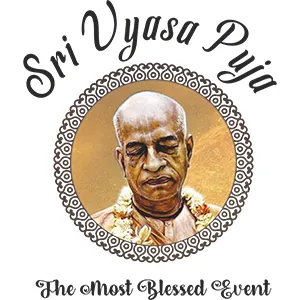
This seemingly simple sentence, spoken countless times by His Divine Grace A.C. Bhaktivedanta Swami Prabhupāda, holds the essence of the vast ocean of Vedic wisdom. If there’s one quote from Śrīla Prabhupāda that every child should memorize, carry in their heart, and live by, it is this: “Chant Hare Kṛṣṇa and be happy.”
At first glance, it might appear too simplistic for a child to be taught as a life lesson. But in truth, these five words carry a transformative spiritual truth — one that can shape not just a child’s behavior but their destiny. This blog explores why this quote is perhaps the best guiding principle for children in today’s complex world, and how its deep spiritual implications make it an ideal mantra for life.
1. The Simplicity Children Need
Children absorb messages best when they are concise and emotionally clear. “Chant Hare Kṛṣṇa and be happy” is not abstract. It’s a clear instruction followed by a desirable outcome — happiness. In an age where children are bombarded by overstimulation, screens, peer pressure, and constant competition, such a simple life instruction stands as a lighthouse of clarity.
Śrīla Prabhupāda, in his compassionate vision, often simplified the most intricate Vedic teachings so that even a child could understand. While he was a scholar of the highest caliber, he repeatedly emphasized that bhakti (devotion) is the most natural and joyful process for any soul — child or adult.
2. Foundation of a Spiritual Life
Children today are often raised with the question, “What do you want to be when you grow up?” They’re taught to chase goals, grades, and success. But how often are they taught to seek peace, purpose, or inner joy?
By remembering and practicing “Chant Hare Kṛṣṇa and be happy,” a child learns early that true happiness isn’t about how many toys they own or how well they perform academically. Rather, joy comes from within — from connection to Kṛṣṇa, the Supreme Personality of Godhead.
Chanting the Hare Kṛṣṇa Mahāmantra — Hare Kṛṣṇa Hare Kṛṣṇa, Kṛṣṇa Kṛṣṇa Hare Hare / Hare Rāma Hare Rāma, Rāma Rāma Hare Hare — is the beginning of a spiritual journey. It purifies the heart, awakens devotion, and establishes a direct link with the divine. To help children understand this power and give them a tool they can always turn to — no matter the situation — is one of the greatest gifts any parent, teacher, or mentor can give.
3. Śrīla Prabhupāda’s Vision for Children
Śrīla Prabhupāda placed great emphasis on educating children in Kṛṣṇa consciousness. He wanted a generation of spiritually grounded, morally strong, and joyfully devoted young people.
He didn’t merely want children to be religious — he wanted them to be spiritually aware. He envisioned schools where children would rise early, chant Hare Kṛṣṇa, learn śāstra, and engage in service with love. His vision was not to create fanatics, but fulfilled, joyful souls who would be strong enough to stand up to the materialistic wave of modern society.
The quote “Chant Hare Kṛṣṇa and be happy” encapsulates this entire vision. It’s a lifestyle — one that is deeply fulfilling, spiritually rich, and universally applicable.
4. Inner Resilience and Emotional Health
The world today is facing a mental health crisis among children. Anxiety, depression, loneliness, and low self-worth have reached alarming levels. In contrast, children raised with spiritual practices show greater emotional stability and resilience.
Chanting the Hare Kṛṣṇa mantra is not just a religious ritual; it’s a therapeutic, transcendental activity. Repetition of the Holy Name calms the mind, purifies the heart, and gives shelter during emotional turbulence. Children who learn this from a young age grow up with an inner anchor — a source of peace no matter the storm.
When Śrīla Prabhupāda said “Chant Hare Kṛṣṇa and be happy,” he wasn’t offering a temporary solution; he was giving the world an eternal medicine. It’s a spiritual vaccine for the diseases of the age — materialism, envy, greed, and fear.
5. Universal Application — Across Faiths and Cultures
Another reason this quote is so suitable for children is its universal nature. While it is distinctly rooted in the Vedic tradition, the message transcends boundaries. Who doesn’t want to be happy? Who wouldn’t want their children to grow up joyful, peaceful, and connected to God?
Śrīla Prabhupāda did not come to impose a new religion but to reawaken our original, spiritual identity. He taught that chanting God’s name — in any tradition — is effective, but the Hare Kṛṣṇa mahāmantra is especially powerful in this Kali-yuga (the present age of quarrel and hypocrisy).
By teaching “Chant Hare Kṛṣṇa and be happy” to children, we are not just giving them a Hindu practice — we are giving them a universal truth. It aligns with the deepest needs of the soul, beyond race, culture, or religion.
6. Leading by Example
Of course, children learn best when they see others doing what they’re told. If a parent or teacher encourages children to chant but doesn’t do so themselves, the impact may be limited. But if a child sees their role model sincerely chanting with joy, it plants a seed that will never be lost.
Śrīla Prabhupāda led by example. He chanted daily, spoke joyfully, served with compassion, and remained happy even amidst immense struggle. His life was living proof that chanting brings happiness. So, for a child to internalize his quote — “Chant Hare Kṛṣṇa and be happy” — they must also see that this process truly works.
7. Planting Seeds of Bhakti
Even if a child strays during their teenage years or adulthood, the impressions created in childhood remain. Śrīla Prabhupāda knew this. He understood the principle of samskāra — the spiritual impressions on the soul. A child who memorizes and lives by “Chant Hare Kṛṣṇa and be happy” may one day return to those roots when the world’s promises fail them.
Like a spiritual safety net, this quote ensures that the soul never fully forgets its true home.