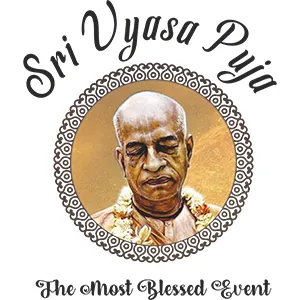
The International Society for Krishna Consciousness (ISKCON), founded by His Divine Grace A.C. Bhaktivedanta Swami Prabhupada, grew from a tiny storefront on New York’s Second Avenue into a global spiritual movement within just twelve years. This wasn’t a coincidence — it was the result of Srila Prabhupada’s unshakable faith, visionary leadership, and series of defining events that shaped ISKCON into what it is today.
Here are the Top Events in ISKCON’s Early History Under Srila Prabhupada that deeply influenced the movement’s direction, growth, and spiritual culture.
1. Srila Prabhupada’s Arrival in the West (1965)
Event: Srila Prabhupada’s 35-day journey aboard the Jaladuta to the U.S.
Why it matters:
This was the moment the global Krishna consciousness movement was born. Srila Prabhupada left India at the age of 69, armed only with a trunk of Srimad-Bhagavatam volumes, 40 rupees, and a divine order to preach in the West. His arrival in Boston and subsequent settlement in New York marked the humble beginnings of what would become a global spiritual renaissance.
This act of courage and surrender was not only the foundation of ISKCON — it was a reminder that when a pure devotee acts on the instructions of guru and Krishna, the impossible becomes reality.
2. Establishment of ISKCON – July 11, 1966
Event: Official registration of the International Society for Krishna Consciousness in New York
Why it matters:
Incorporating ISKCON legally gave Srila Prabhupada the organizational framework to carry out his mission with structure and continuity. He crafted the seven purposes of ISKCON, which remain the guiding mission of the movement to this day.
This step allowed Srila Prabhupada to formally accept disciples, establish temples, and organize preaching efforts under a unifying vision. It also gave the young devotees a shared identity and sense of purpose.
3. Ratha-yatra Festival in San Francisco (1967)
Event: The first public Ratha-yatra held outside of India
Why it matters:
When Srila Prabhupada introduced Jagannath Ratha-yatra in Golden Gate Park, it was revolutionary. Never before had such a traditional Indian festival been so publicly and joyously celebrated in the West.
The San Francisco Ratha-yatra became a turning point for ISKCON’s public presence. It transformed the movement from a small group of devotees into a visible spiritual force, bringing Krishna to the streets — just as Lord Chaitanya Mahaprabhu had done. This festival later spread to dozens of cities worldwide, fulfilling Srila Prabhupada’s desire for Krishna’s holy name and form to be glorified in every town and village.
4. Srila Prabhupada Introduces the BTG and Book Distribution Revolution (Late 1960s – 1970s)
Event: Resurrecting the Back to Godhead magazine and translating major Vedic texts
Why it matters:
Srila Prabhupada’s emphasis on book publishing and distribution became the most powerful engine of ISKCON’s outreach. He once said, “Books are the basis.” He personally translated and published the Bhagavad-gītā As It Is, Śrīmad-Bhāgavatam, and Caitanya-caritāmṛta.
Simultaneously, he inspired a generation of enthusiastic devotees to distribute these books in subways, airports, and door-to-door. This single strategy introduced millions of people to Krishna consciousness, planted seeds in hearts across the world, and generated the financial and philosophical foundation for the movement.
5. Establishment of Major Temples: Vrindavan, Mayapur, Mumbai (1971–1977)
Event: Groundbreaking ceremonies and temple construction in the holy dhamas
Why it matters:
Prabhupada wanted three key temples in India to serve as spiritual beacons:
-
Krishna-Balaram Mandir in Vrindavan
-
Sri Mayapur Chandrodaya Mandir in the land of Lord Chaitanya
-
Radha-Rasabihari Mandir in Juhu, Mumbai
These temples weren’t just places of worship; they were spiritual headquarters for ISKCON’s East-West synthesis. Through these temples, Srila Prabhupada attracted millions of Indians to Krishna consciousness, re-established Vedic culture in modern cities, and anchored the movement in the land of its origin.
Each of these temples came with monumental challenges — court cases, financial strain, local resistance — but Srila Prabhupada never gave up. His perseverance showed that Krishna would always protect sincere devotional efforts.
6. First GBC Formation and Devolution of Management (1970)
Event: Srila Prabhupada creates the Governing Body Commission
Why it matters:
Understanding that he would not remain physically present forever, Srila Prabhupada formed the Governing Body Commission (GBC) in 1970 to manage ISKCON collectively. He stressed that ISKCON must not become dependent on a single individual for leadership after his departure.
This was a visionary step — rare among spiritual leaders — to institutionalize succession and ensure that Krishna consciousness would continue under collective governance. Though the GBC would evolve and face challenges after his departure, this foundational decision preserved ISKCON’s unity and structure.
7. First Farm Communities and Varnasrama Vision (Mid-1970s)
Event: Srila Prabhupada begins promoting rural, self-sufficient farm communities
Why it matters:
By the 1970s, Srila Prabhupada saw the dangers of increasing materialism, mechanization, and urban over-dependence. He emphasized simple living and high thinking and promoted varnasrama-based rural communities where devotees could live off the land, protect cows, and center their lives around Krishna.
Farm projects like New Vrindaban (USA), Gita Nagari, and New Govardhan (Australia) became prototypes for this vision. Though difficult to implement, they reflected a deep insight: spiritual life thrives in simplicity and purity, not material complexity.
8. Srila Prabhupada’s World Tours (1967–1977)
Event: Traveling to over 24 countries to personally preach and establish temples
Why it matters:
Despite his advanced age and frail health, Srila Prabhupada relentlessly traveled the world — giving lectures, installing deities, training devotees, meeting scholars and leaders. He traveled around the globe 14 times, creating a truly international spiritual society.
Wherever he went — from Tokyo to Tehran, Nairobi to New York — he inspired deep love and transformation. His personal association was like fire: it ignited the desire for bhakti in every soul he touched.
These world tours not only expanded ISKCON geographically but deepened its unity and standard globally.
9. The BBT and Translation Work
Event: Establishment of the Bhaktivedanta Book Trust (BBT) in 1972
Why it matters:
To ensure the continuous printing and global distribution of Vedic literature, Srila Prabhupada formed the BBT, which became the world’s largest publisher of Indian spiritual texts. The BBT ensured that the spiritual message was always available — in dozens of languages and beautifully designed volumes.
Srila Prabhupada personally oversaw each word, edit, and cover design. His books were his legacy, and the BBT was the vehicle for preserving it.
10. Final Days and Departure (1977)
Event: Srila Prabhupada’s passing in Vrindavan on November 14, 1977
Why it matters:
Prabhupada’s final months were a profound expression of surrender. Despite intense physical pain, he continued to guide his disciples, translate the Bhagavatam, and speak about Krishna till his last breath. His departure in the holy dham, surrounded by loving disciples chanting the holy name, was the final lesson: leave this world serving Krishna.
Though physically gone, his movement lived on — through his books, instructions, institutions, and empowered followers.