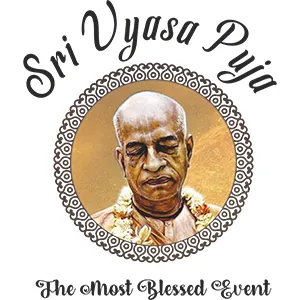
Srila A.C. Bhaktivedanta Swami Prabhupada’s journey to the West was not merely a physical voyage from India to America — it was a historic, spiritual turning point that changed the course of religious thought and the lives of millions. A man in his late 60s, penniless and unknown, sailed across the ocean with only a crate of books, a few rupees, and unshakable faith in the instruction of his spiritual master.
But what were the major moments that led to this world-changing mission? Let’s explore the Top 5 Turning Points in Srila Prabhupada’s Journey to the West — events that defined his purpose, shaped ISKCON, and revealed the hand of divine destiny.
1. Receiving the Order of His Spiritual Master (1922)
Location: Calcutta
Event: First meeting with Srila Bhaktisiddhanta Sarasvati Thakura
Significance: The seed of his mission was planted.
In 1922, a young Abhay Charan De was introduced to Srila Bhaktisiddhanta Sarasvati Thakura, a powerful preacher and Gaudiya Vaishnava acharya. During their first meeting, the learned sannyasi told Abhay: “You are an educated young man. Why don’t you preach Lord Chaitanya’s message in English to the Western world?”
This bold instruction struck a chord deep in Abhay’s heart. Though he didn’t act immediately, that one sentence shaped the next 43 years of his life. The fire to fulfill this order never died, even as he faced business struggles, family obligations, and material obstacles. This meeting was not just a conversation — it was a divine assignment. Prabhupada would later say, “This is my life and soul — the order of my spiritual master.”
2. Taking Sannyasa (1959)
Location: Mathura (at the Keshavaji Gaudiya Math)
Event: Acceptance of the renounced order
Significance: Full commitment to spiritual mission.
After decades of family duties, failed business ventures, and ongoing writing efforts, Abhay finally took sannyasa — the renounced order of life — at the age of 63. He became Bhaktivedanta Swami, now free from material entanglements and fully dedicated to preaching Krishna consciousness.
Sannyasa wasn’t just a formality. It was an inner resolve — to give up everything for Krishna. He left behind home, comfort, and personal safety. For a man of that age to travel alone, with little support, was practically unheard of. But Srila Prabhupada was no ordinary man — he was fueled by divine purpose.
This formal step allowed him to preach boldly, travel widely, and take the ultimate risk: to leave India and face the unknown West.
3. Writing and Printing the First Volumes of Srimad-Bhagavatam (1960–1965)
Location: Delhi and Vrindavan
Event: Publishing his life’s work despite poverty
Significance: Carrying the philosophical foundation for global preaching.
Prabhupada spent years in the Radha-Damodar temple in Vrindavan, immersed in writing, translating, and commenting on the Srimad-Bhagavatam. He personally typed the manuscripts, raised money to print them, and even went door-to-door in Delhi during the scorching summer to sell his books.
He once said, “If these books are distributed, my Guru Maharaj will be pleased.” The first three volumes of the Bhagavatam — painstakingly produced despite illness, loneliness, and financial hardship — would later become the spiritual ammunition he carried to America. These books were not just scripture; they were containers of mercy, his spiritual offering to the world.
Without this step, the Hare Krishna movement might never have had the intellectual and spiritual grounding that made it so compelling to seekers in the West.
4. Boarding the Jaladuta (August 1965)
Location: Calcutta to Boston
Event: 35-day sea voyage aboard a cargo ship
Significance: The leap of faith that changed the world.
On August 13, 1965, Srila Prabhupada boarded the cargo ship Jaladuta, carrying a small suitcase, a few clothes, his books, and forty rupees. He had no contacts in the West, no support system, and had suffered two heart attacks during the journey.
But he also carried something else — the divine determination to fulfill his spiritual master’s order. Onboard, he wrote the now-famous “Prayer to Lord Krishna” in Bengali, in which he humbly begged the Lord for strength to preach. He wrote:
His complete surrender on the deck of that ship was a cosmic moment — a quiet, ocean-side offering that would ripple into a global movement. This act of courage and devotion makes it one of the most pivotal moments in modern spiritual history.
5. Establishing ISKCON in New York (1966)
Location: 26 Second Avenue, New York City
Event: Registering the International Society for Krishna Consciousness
Significance: Formal birth of a global mission.
After weeks of struggling in New York — giving lectures to a handful of hippies, sleeping in donated apartments, and cooking his own prasadam — Srila Prabhupada formally incorporated ISKCON on July 11, 1966.
This legal step wasn’t just a bureaucratic move. It marked the birth of an unstoppable spiritual revolution. From this small storefront in the Lower East Side, the maha-mantra would soon echo in temples, universities, and streets around the globe. What started with a few curious youth chanting “Hare Krishna” turned into a worldwide movement with thousands of temples, farms, schools, restaurants, and millions of followers.
Prabhupada once said, “I have created your good fortune with great difficulty.” The establishment of ISKCON was his gift to the world — a structured yet spiritually rich platform where bhakti could flourish on every continent.