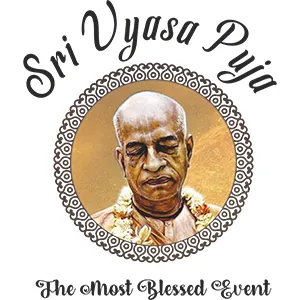
Śrīla A.C. Bhaktivedānta Swami Prabhupāda was not just a spiritual teacher—he was a divine architect. He didn’t just present Kṛṣṇa consciousness; he systematized, protected, and infused it with non-negotiable principles that would preserve its purity across centuries. He established a movement that would uplift a dark age, and to ensure its potency, he left behind core values—pillars that must never be diluted or compromised.
While Śrīla Prabhupāda was compassionate and dynamic in outreach, he was unwavering when it came to foundational truths. He knew the disease of Kali-yuga was deep, and the medicine had to be strong. Over time, institutions may face pressures—cultural, political, social—but the spiritual potency of ISKCON lies precisely in how loyally we hold to what he gave us.
Here is a ranked list of the core principles of Śrīla Prabhupāda that must be preserved at all costs.
1. Pure Devotional Service to Kṛṣṇa as the Ultimate Goal
At the heart of everything Prabhupāda taught is this principle: the highest purpose of human life is to develop pure, unalloyed devotion to Kṛṣṇa.
This excludes all diluted versions of spirituality that mix devotion with material desires—what he called kaitava dharma, or cheating religion. Prabhupāda consistently rejected impersonalism, voidism, or any philosophy that didn’t lead to loving service to the Supreme Personality of Godhead.
No matter how modern the presentation or accessible the language, the essence must remain:
“The goal is not just to be spiritual—it is to serve Kṛṣṇa with love.”
Compromising this turns Kṛṣṇa consciousness into just another wellness trend or ethical system. Preserving it ensures the eternal relevance of the movement.
2. Strict Adherence to the Four Regulative Principles
Śrīla Prabhupāda did not believe in half-measures when it came to spiritual discipline. He required all serious practitioners to follow these four principles:
-
No meat-eating
-
No intoxication
-
No illicit sex
-
No gambling
These were not arbitrary rules. They were carefully prescribed to purify the consciousness and create a foundation for real bhakti. Prabhupāda was aware that the world wouldn’t like such strictness—but he also knew that compromise would kill the potency of the movement.
Even when it meant losing followers or facing criticism, he refused to lower the standard. These principles remain non-negotiable guardrails that separate genuine sādhana from casual spirituality.
3. Daily Chanting of the Hare Kṛṣṇa Mahāmantra
Śrīla Prabhupāda taught that in Kali-yuga, there is no other way to attain liberation than the chanting of the holy names:
“Hare Kṛṣṇa, Hare Kṛṣṇa, Kṛṣṇa Kṛṣṇa, Hare Hare,
Hare Rāma, Hare Rāma, Rāma Rāma, Hare Hare.”
He insisted that initiated devotees chant a minimum of 16 rounds daily, no matter their external circumstances. He placed chanting at the center of temple life, family life, and even management.
This was not a ritual; it was the lifeline. The japa mala is where a devotee’s relationship with Kṛṣṇa is built, one mantra at a time. The chanting must never be minimized, rushed, or seen as optional. Even when everything else gets complex, the sound of the holy name remains the simplest and most powerful connection to God.
4. Fidelity to the Disciplic Succession and Guru Paramparā
Śrīla Prabhupāda never claimed to create something new. He always referred to himself as a humble servant in the Brahma-Madhva-Gauḍīya Sampradāya, and emphasized that truth must be passed down through disciplic succession.
He didn’t invent Kṛṣṇa consciousness—he revived and delivered it unchanged, with fidelity to the line of Śrīla Bhaktisiddhānta Sarasvatī, Bhaktivinoda Ṭhākura, and ultimately Lord Caitanya.
To preserve this:
-
We must never alter siddhānta (philosophy) for convenience.
-
Teachers within ISKCON must represent Śrīla Prabhupāda’s conclusions, not personal interpretations.
-
The guru must always be a transparent via-medium, not an independent authority.
Deviation from the paramparā is the first crack through which confusion and spiritual downfall enter. Holding tightly to this lineage is the only way to ensure spiritual clarity and protection.
5. Book Distribution and Śāstra as the Basis of Preaching
Śrīla Prabhupāda often said, “These books will be the law books for the next 10,000 years.” He considered book distribution not just one method of preaching—but the most important service to humanity.
Why?
Because these books carry the unaltered words of Kṛṣṇa and the ācāryas. They are the foundation upon which all preaching must rest. When devotees base their lives and teachings on Prabhupāda’s books, the movement remains rooted and authentic.
No amount of modern techniques—social media, events, or creative art—can substitute for the transformational power of śāstra. As Prabhupāda warned, “Do not add anything. Do not subtract anything.”
His books must remain central, untouched, and revered.