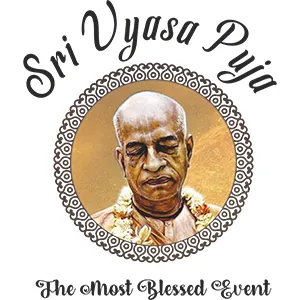
Śrīla A.C. Bhaktivedānta Swami Prabhupāda’s life was a rare demonstration of divine courage, vision, and compassion. He crossed oceans at the age of 69, bearing only a trunk of books and unshakable faith in the instruction of his guru. Within a decade, he established ISKCON, translated over 70 volumes of Vedic literature, and inspired thousands globally to take to Kṛṣṇa consciousness. But as time moves on, so must the vision, strategy, and integrity of the movement he left behind. To ensure his mission continues to flourish, there are specific areas where focus needs to be intensified today.
Here, we rank the key areas requiring urgent attention and deep commitment.
1. Deep and Systematic Scriptural Education
One of Śrīla Prabhupāda’s strongest desires was that his followers read his books daily and apply them seriously. While book distribution is thriving in many regions, there is a visible gap in actual comprehension and application. Many devotees may carry the books or quote verses, but without study, reflection, and realization, the movement risks becoming ritualistic or superficial.
Prabhupāda emphasized: “If you want to know me, read my books.”
Where Focus Is Needed:
-
Structured Study: Encourage courses like Bhakti-śāstrī, Bhakti-vaibhava, and online Gītā groups in every temple and congregation.
-
Daily Reading Habits: Promote Śrīmad-Bhāgavatam and Bhagavad-gītā study as essential sādhana.
-
Philosophical Training for Preachers: Without clarity, preaching can turn into sentimentalism or philosophical compromise.
The time has come to not just possess Prabhupāda’s books but to live them.
2. Reviving Brahminical Standards and Sādhana
Śrīla Prabhupāda envisioned ISKCON as a brāhmaṇical society that could guide the rest of the world. But brāhmaṇas are not made by ritual initiation alone — they are made through character, cleanliness, discipline, compassion, and deep scriptural knowledge.
In many places today, spiritual standards have become relaxed — morning programs are weak, personal habits are inconsistent, and substance is sacrificed for style. This was not Prabhupāda’s model.
Where Focus Is Needed:
-
Reviving the morning program: Maṅgala-ārati, Japa, Śrīmad-Bhāgavatam class as daily nourishment.
-
Encouraging simple living, high thinking — a true hallmark of brahminical life.
-
Raising awareness about integrity, personal purity, and humility as essential qualifications of spiritual leadership.
ISKCON must become the lighthouse of spiritual standards for the world again.
3. Building Strong, Visionary, and United Leadership
Śrīla Prabhupāda was a visionary who not only preached but built an organized movement. Today, ISKCON continues to expand, but the challenge lies in consistent, mature, and transparent leadership that reflects Prabhupāda’s mood.
Leadership is not about position; it’s about seva, courage, and alignment with guru’s desire.
Where Focus Is Needed:
-
Mentoring future leaders early — from youth and brahmacārīs.
-
Leadership training in both devotional maturity and management.
-
Nurturing unity among leaders without suppressing diversity of expression.
Disagreements should not divide us. As Prabhupāda said, “Your love for me will be shown by how much you cooperate with each other.”
4. Intelligent and Strategic Youth Outreach
The future of ISKCON depends on the youth. Śrīla Prabhupāda’s early success came from transforming confused hippies into confident devotees. Today’s youth may not live in communes, but they suffer from anxiety, identity confusion, addiction, and existential despair. They are hungry for meaning, but allergic to dogma.
To connect with them, we must speak their language without diluting the philosophy.
Where Focus Is Needed:
-
Relevant content via digital platforms: short videos, podcasts, reels, blogs.
-
Student preaching through youth forums, retreats, and personal mentorship.
-
Addressing real-life challenges — loneliness, relationships, career dilemmas — through the lens of bhakti.
It is time to move beyond mere ritual and present Kṛṣṇa consciousness as a transformational lifestyle.
5. Implementation of Daivī-Varnāśrama and Rural Living
One of Śrīla Prabhupāda’s most urgent and yet least-implemented instructions was the establishment of Daivī-Varnāśrama-dharma — a balanced society of spiritually guided roles. He especially emphasized self-sufficient farm communities centered on Kṛṣṇa. He saw this as the cure to the artificiality and exploitation of modern urban life.
Where Focus Is Needed:
-
More investment in rural preaching centers and simple living.
-
Encouraging cow protection, local agriculture, and spiritual economy.
-
Training devotees in traditional skills and sattvic lifestyles.
This is not optional; Prabhupāda said, “Fifty percent of my work is incomplete without Varnāśrama.”
6. Devotee Care: Physical, Emotional, and Spiritual
Śrīla Prabhupāda had a deeply personal relationship with his disciples. He cared for their health, family life, doubts, and feelings. As ISKCON grows, we must ensure it doesn’t become merely an institution — it must remain a family.
Devotees today face challenges like burnout, marital stress, mental health issues, and spiritual stagnation. If we don’t support them holistically, we lose valuable members and cause unnecessary suffering.
Where Focus Is Needed:
-
Creating systems for pastoral and emotional care.
-
Trained devotee counselors and mentors, especially for women, youth, and elders.
-
Promoting a culture of empathy, listening, and inclusion — not judgment.
As Prabhupāda said, “Love is the basis of everything in this movement.”
7. Preserving Unity While Embracing Diversity
ISKCON is a global movement with diverse cultures, languages, and approaches. While Prabhupāda insisted on philosophical purity, he also encouraged localized preaching methods. Unfortunately, sometimes we see conflict due to differences in style, opinion, or regional practices.
Unity does not mean uniformity. But diversity must be anchored in Prabhupāda’s instructions.
Where Focus Is Needed:
-
Open dialogue on sensitive topics without offense or polarization.
-
Tolerance for differences while upholding essential principles.
-
Avoiding personality cults and prioritizing mission over ego.
When Śrīla Prabhupāda said, “I am present in my books, my instructions, and my followers,” — it meant we must work together to reflect his heart, not just repeat his words.