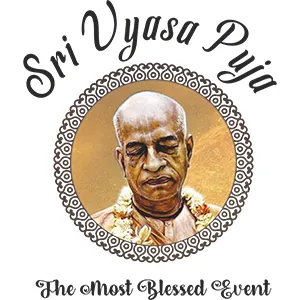
Srila Prabhupāda was not only the founder of ISKCON — he was its visionary, architect, and spiritual compass. Everything he established — from temple rituals to book distribution, from farm projects to educational systems — was rooted in deep scriptural authority and divine instruction. His teachings weren’t suggestions. They were life-saving principles meant to protect the future of the Krishna consciousness movement.
However, as time passes, there’s a real danger that institutional momentum might eclipse founder consciousness. History shows that even pure spiritual movements can drift, degrade, or become diluted if their foundational teachings are forgotten or reinterpreted for convenience.
Here are the top risks ISKCON may face in the future if Srila Prabhupāda’s teachings are ignored — ranked by urgency and impact:
🥇 1. Spiritual Drift: Ritual Without Realization
Prabhupāda didn’t come to build a religion of rituals. He came to awaken hearts, change consciousness, and establish pure bhakti. If his teachings are ignored, ISKCON risks becoming a society that goes through motions — chanting, dressing in dhoti–kurta, celebrating festivals — but without deep personal transformation.
Temples might remain active, but if the fire of personal sādhana, śāstra study, and guru connection fades, the movement may thrive externally while dying internally.
“Without philosophy, sentiment will not last. And without sentiment, philosophy is dry.” – Śrīla Prabhupāda
🥈 2. Guruship Misuse and Leadership Deviation
Srila Prabhupāda emphasized qualification over position, and responsibility over recognition. He warned against pride, imitation, and misuse of spiritual roles. If his high standards for becoming a guru or leader are watered down, ISKCON risks:
-
Unqualified individuals assuming guru roles.
-
Spiritual breakdowns among disciples due to fall-downs.
-
Loss of faith in the system among newcomers and devotees.
This kind of disillusionment is already seen in parts of the movement, and unless checked with proper training, oversight, and humility, the problem could deepen.
🥉 3. Sectarianism and Internal Factions
Prabhupāda was universal in vision — aiming for unity through Krishna consciousness, not through political camps. Ignoring his instruction to stay united under the disciplic succession could lead to:
-
Splinter groups forming out of ego or agenda.
-
Camps based on guru loyalties or ideological labels.
-
Weakening of collective strength and preaching momentum.
“Our love for each other will be shown by how well we cooperate to spread Krishna consciousness.” – Srila Prabhupāda
The moment internal loyalty outweighs loyalty to his teachings, unity will erode.
🏅 4. Loss of Founder-Ācārya Centrality
One of the biggest dangers is gradually minimizing Srila Prabhupāda’s role, intentionally or unintentionally. If new generations grow up disconnected from his books, lectures, and example, there’s a serious risk of:
-
Replacing him with contemporary ideologies.
-
Losing the unique mood he brought — boldness, simplicity, śāstra-centered preaching.
-
Creating an institution that bears his name but not his spirit.
Future devotees may ask, “Who really is Srila Prabhupāda?” — unless we actively anchor everything in his presence.
🏵 5. Compromising Philosophy to Please the World
Prabhupāda stood firmly on śāstra, even when it was unpopular. He didn’t bend to political correctness or modern trends. He presented Krishna consciousness as it is.
But today, with pressure from the world — social media, interfaith trends, secular academia — there’s a growing risk of:
-
Diluting teachings on karma, demigods, varnashrama, or guru-tattva.
-
Making Krishna consciousness “palatable” but powerless.
-
Reducing bhakti to a wellness lifestyle rather than a radical spiritual path.
Once compromise begins, purity suffers — and with it, potency.
🎯 6. Materialization of Temples and Projects
Srila Prabhupāda said temples must be spiritual embassies, not clubs or corporate machines. But when we ignore his mood, there’s a risk that:
-
Temples become performance centers, rather than centers of transformation.
-
Projects focus more on branding than bhakti.
-
Financial growth takes precedence over spiritual upliftment.
When buildings become more important than bhajan, the soul of the movement begins to fade.
🕳 7. Neglect of Youth and Second Generation
One of Prabhupāda’s deepest desires was to see devotee children grow up strong, intelligent, and Krishna conscious. But if his emphasis on Vedic education, care, and mentoring is neglected:
-
ISKCON may lose its future leaders.
-
Youth may grow disillusioned or disinterested.
-
The movement becomes elder-heavy, with fewer young torchbearers.
Future strength depends on training, empowering, and trusting the next generation — with Srila Prabhupāda as their anchor.