Śrīla Prabhupāda’s journey from Calcutta to New York wasn’t just a geographical one — it was a mission to make Kṛṣṇa consciousness available to every soul, in every country, beyond caste, color, and creed. And while his books were the foundation, and temples the base, it was through festivals that his vision visibly bloomed. Because festivals were not just events — they were Śrīla Prabhupāda’s strategy to showcase the universality of bhakti.
Below is a heartfelt walk through those festivals that most fully carry and express his global vision. These are not simply celebrations — they are spiritual statements to the world that Kṛṣṇa belongs to everyone.
1. Ratha Yatra — The Parade of Bhakti Across Continents
Śrīla Prabhupāda once said, “This Ratha-yātrā is the most important festival for preaching.” And it shows.
What began in Jagannātha Purī centuries ago, was brought by Śrīla Prabhupāda to the heart of San Francisco in 1967 — and from there, it became a worldwide explosion of devotion. Ratha-yātrās are now held in London, Sydney, Durban, Moscow, Tokyo, Nairobi, and across the Americas. Why?
Because it encapsulates the essence of his vision — the Lord coming out to meet the people, pulled by ropes of love, followed by kīrtana, dance, prasādam, and philosophy, all in the open air.
Ratha-yātrā is a living symbol of the spiritual world touching Earth. In one stroke, it removes barriers of language, religion, and race. People don’t just witness it — they participate in it.
Every time Lord Jagannātha rolls through the city streets, Śrīla Prabhupāda’s voice echoes: “This is how the whole world can become purified — by taking part in Lord Jagannātha’s festival.”
2. Janmāṣṭamī — The World Celebrates the Appearance of the Supreme
Before Śrīla Prabhupāda, Janmāṣṭamī was largely an Indian celebration. After him, it became an international event.
He transformed Janmāṣṭamī into more than just a religious holiday — he made it a festival of identity. Devotees from every culture now fast, decorate temples, dress Deities, offer dozens of bhogas, perform dramas, and stay up till midnight — all to say: “He is our Lord too.”
In London, New York, Johannesburg, Buenos Aires — Janmāṣṭamī became a global confirmation that Kṛṣṇa is not confined to any country. Śrīla Prabhupāda often reminded us that Kṛṣṇa’s appearance is not mythology, but historical and eternal — and worthy of celebration by all humanity.
When people queue for hours to glimpse the Lord, when foreign guests join aarti with wonder in their eyes, when children in Europe sing “Govinda Jaya Jaya” — it’s not just a festival. It’s a vision fulfilled.
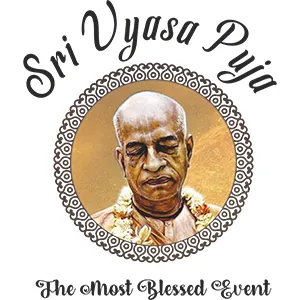
3. Śrīla Prabhupāda’s Vyāsa-pūjā — Honoring the Messenger Across the World
One of the most personal and moving festivals in ISKCON is Śrīla Prabhupāda’s Vyāsa-pūjā. It’s not just a ritual offering of flowers — it’s the world coming together to say, “Thank you.”
Disciples and grand-disciples from Africa to Argentina, Russia to Fiji, gather to read offerings, sing his favorite bhajans, enact moments from his life, and remember how his sacrifice brought Kṛṣṇa into their lives.
In his Vyāsa-pūjā books, you’ll find offerings in dozens of languages, by people of every background, all calling him their father, teacher, savior, and shelter. That’s what Śrīla Prabhupāda wanted — not to be worshiped personally, but to be remembered as the one who delivered the message faithfully.
And today, every ISKCON center — whether it’s a grand temple or a one-room flat — celebrates Vyāsa-pūjā with love. It is the festival where Śrīla Prabhupāda’s personal vision meets universal gratitude.
4. Govardhan Pūjā — A Festival of Simplicity for a Complicated World
Śrīla Prabhupāda saw Govardhan Pūjā not only as a remembrance of Kṛṣṇa’s pastime, but as a teaching tool: depend on Kṛṣṇa, not on material arrangements. In an increasingly industrial, nature-disconnected world, he reintroduced this festival to remind humanity of humility and sustainability.
This celebration — with its hill of sweets, imitation of Govardhan, and Annakūṭa offerings — became a way for people from every background to connect to Kṛṣṇa in a sweet, accessible, and joyful form.
What was once a rural celebration became a worldwide offering. Even in cold countries where cows are scarce, devotees lovingly offer pictures of cows, butter, and sweets with deep feeling. And that’s the magic — Śrīla Prabhupāda made a festival rooted in Vraja’s soil reach hearts in Germany, Chile, and Canada.
5. Gaura Pūrṇimā — The Rising of the Golden Moon Over the World
While much of the world was still discovering Kṛṣṇa, Śrīla Prabhupāda went further — he introduced the world to Gaura. He once said, “If you understand Lord Caitanya, you understand everything.”
Gaura Pūrṇimā, the appearance day of Lord Caitanya Mahāprabhu, was central to his vision because it revealed the most merciful form of God — one who gave love of Godhead freely, just by chanting.
Today, in every ISKCON center, Gaura Pūrṇimā is marked with fasting, kīrtana, abhiṣekas, and dramatic readings. But its real power lies in what it stands for: this movement was launched by Lord Caitanya, and Śrīla Prabhupāda carried it across oceans.
When you see people from China, Italy, Nigeria, and Colombia dancing together, arms raised, chanting “Haribol!” on this day — you realize Gaura’s prophecy is unfolding: prthivīte āche yata nagarādi grāma…