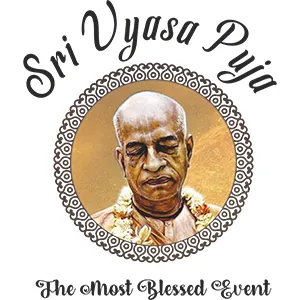
Śrīla Prabhupāda’s journey across the globe was not just physical — it was deeply spiritual. With nothing but a trunk of books and unwavering faith in Lord Kṛṣṇa, he stepped out of India at the age of 69 to spread the message of bhakti-yoga across the world. Today, his teachings have touched every continent — but not equally. Some lands opened their hearts rapidly, while others took time. Some absorbed his message with childlike wonder; others with cautious intellect. But wherever the sincerity was met with śravaṇam and kīrtanam, transformation happened.
Let’s look at the continents where Śrīla Prabhupāda’s mission flourished the most, not in terms of geography, but in depth of practice, reach of preaching, and legacy of service.
1. North America — The Movement’s Historic Springboard
No continent witnessed the initial explosion of Śrīla Prabhupāda’s mission like North America. It was on the streets of New York, amid the chaos of the 1960s counterculture, that the first seeds of ISKCON were planted. At 26 Second Avenue, a simple storefront turned into a spiritual embassy of Goloka Vṛndāvana. Young seekers, weary of materialism and hollow ideologies, found deep answers in the Bhāgavad-gītā and Kṛṣṇa’s holy name.
America not only gave Prabhupāda his first disciples, but also the platform to publish and distribute millions of his books, organize massive festivals, and establish temples across every major city. Places like Los Angeles, New Vrindaban (West Virginia), and Detroit became centers of Vedic culture. Even today, North America continues to be a stronghold of his movement — with dedicated sannyāsīs, scholars, second-generation devotees, and book distributors keeping the flame alive.
2. India — A Sacred Return with Newfound Power
Though born and raised in India, Śrīla Prabhupāda’s mission gained full respect only after its global validation. When he returned to India with his Western disciples chanting Sanskrit ślokas and dancing in saṅkīrtana, it stunned the nation. Suddenly, temples that had been ignored were revitalized. Ancient texts were seen with new reverence. The image of “foreigners” becoming brāhmaṇas, following four regulative principles, and living simply in dhoti-kurta challenged the sleepy religious habits of many Indians.
From Mayapur to Mumbai, Vṛndāvana to Bangalore, ISKCON flourished quickly. Śrīla Prabhupāda’s grand vision of the Māyāpur temple as the headquarters of the spiritual revolution remains in motion. In India today, ISKCON hosts thousands of regular programs, schools, farms, youth groups, and prasādam distribution centers. India may have been late in embracing his mission, but once it did, it became one of its most fertile soils.
3. Europe — Where Preaching Met Depth and Austerity
Europe received Śrīla Prabhupāda’s teachings with a different mood — more philosophical than emotional, more structured than spontaneous. But once the seed was planted, it rooted deeply. In countries like the United Kingdom, Śrīla Prabhupāda’s mission saw unprecedented visibility — especially when George Harrison of The Beatles supported the devotees, produced the “Hare Kṛṣṇa Mantra” record, and even donated the Bhaktivedanta Manor property.
ISKCON spread across the continent, reaching countries with vastly different languages and histories — from Germany to Italy, Sweden to Slovenia. Despite occasional social resistance, European devotees often displayed intellectual depth and long-term commitment, helping translate Prabhupāda’s books into dozens of languages and establishing some of the world’s most beautiful rural farm communities based on varṇāśrama principles.
Though modern secularism sometimes pushes faith to the margins, the European ISKCON scene remains resilient, scholarly, and culturally impactful.
4. South America — The Continent of Heartfelt Devotion
Few regions embraced Kṛṣṇa consciousness with the emotional intensity and artistic devotion as South America. In countries like Brazil, Argentina, Peru, and Chile, devotees developed a strong culture of kīrtana, Deity worship, festivals, and beautiful prasādam traditions. Śrīla Prabhupāda visited Venezuela personally and was deeply pleased by the spiritual enthusiasm he saw there.
Despite political and economic hardships in many parts of the continent, South American devotees often show astonishing resilience. They conduct festivals with thousands of people, maintain well-run farms and temples, and contribute richly to kīrtana culture. Spanish and Portuguese translations of Prabhupāda’s works continue to inspire new generations.
South America shows us that bhakti is not dependent on comfort — it thrives best where hearts are open and eager.
5. Africa — Rising from Sincerity and Sacrifice
Though ISKCON’s presence in Africa started later and under more difficult conditions, it has steadily grown into one of the most sincere and service-driven expressions of Prabhupāda’s legacy. From Nairobi and Durban to Lagos and Accra, temples have flourished where local communities saw not just exotic culture but real spiritual value.
Śrīla Prabhupāda personally visited Africa and appreciated the simplicity and hospitality of the people. He once remarked that in many ways, the African devotees understood the essence of Kṛṣṇa consciousness more than intellectuals in the West. Today, African ISKCON communities are known for their enthusiastic public kīrtanas, active temples, and devotion to both outreach and education — even amidst limited resources.
Africa may not yet be the most visible face of ISKCON, but it’s quietly becoming one of its most faithful hearts.
6. Australia and Oceania — A Humble But Steady Flame
Śrīla Prabhupāda personally visited Australia several times and established strong centers in cities like Sydney and Melbourne. The famous installation of Śrī Śrī Rādhā-Gopīnatha in Melbourne and the preaching momentum that followed laid a foundation of lasting bhakti culture. ISKCON in Australia continues to be stable and active — with Rathayātrās, prasādam programs, and university outreach efforts.
In smaller nations across Oceania — like New Zealand and Fiji — the bhakti flame burns steadily. Local communities maintain beautiful temples and welcome visitors from across the globe. These regions may not have massive numbers, but they offer purity, hospitality, and consistency — all qualities dear to Śrīla Prabhupāda.
7. The Unreached — A Call for Future Pioneers
Even as we celebrate the continents where Prabhupāda’s teachings have flourished, there are entire regions where the movement still waits for a breakthrough. Central Asia, parts of East Asia, and many island nations still remain largely untouched. Language barriers, political restrictions, and cultural isolation make preaching difficult — but not impossible.
Śrīla Prabhupāda never demanded success, only sincere effort. These unreached places are not “failures,” but waiting grounds — fields awaiting the next spiritual pioneers who will carry forward his instructions with humility and boldness.