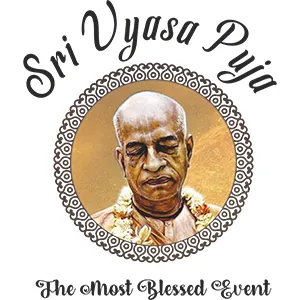
Srila A.C. Bhaktivedanta Swami Prabhupāda’s teachings did not merely comfort the soul; they challenged the intellect. He often presented ideas that sharply contradicted modern beliefs, societal norms, or even our own habits of thinking. Yet, with astonishing clarity and fidelity to śāstra, he explained them in a way that eventually made the heart surrender—even if the mind initially resisted.
Here are seven of the most challenging concepts that Srila Prabhupāda explained with unwavering authority and compassion:
1. We Are Not This Body
Perhaps the most foundational yet difficult concept is the understanding that we are not the body—we are the soul, the eternal servant of Krishna. While the idea sounds spiritual and uplifting, its full realization demands a radical shift in identity. Most of us live deeply entangled with bodily designations: nationality, gender, race, caste, social roles. Prabhupāda repeatedly stated that these are all external. We are not American, Indian, male, female—we are spirit soul (jīva), part and parcel of Krishna. To accept this requires dismantling decades of conditioning and ego attachments. Still, he patiently taught this through analogies like the car and driver: the body is just a vehicle.
2. This World Is a Prison House
Srila Prabhupāda boldly declared that the material world is not our real home—it is a temporary, miserable place meant for correction, not enjoyment. “This place is duḥkhālayam aśāśvatam—full of miseries and temporary,” he quoted from the Bhagavad-gītā. For those trying to make the world a better or more comfortable place, this statement can feel pessimistic. But Prabhupāda wasn’t anti-world; he was pro-reality. He didn’t say we shouldn’t act with compassion or intelligence here—he said we shouldn’t forget that this is not our eternal home. Our real goal is to return to Krishna’s spiritual world.
3. Sense Gratification Is Not Happiness
Modern life promotes the idea that happiness lies in indulging the senses. Srila Prabhupāda completely overturned this idea, calling it the path of bondage and repeated birth and death. “Real pleasure is in serving Krishna, not in gratifying the senses,” he taught. The mind rebels against this—after all, doesn’t a good meal, music, or romantic love bring joy? Prabhupāda acknowledged the temporary nature of such pleasures but insisted they were ultimately flickering and addictive. True joy, he said, lies in transcendental devotional service (bhakti-yoga), which connects us to eternal bliss.
4. Life Exists Everywhere—even on the Sun
In an age dominated by science, Prabhupāda’s assertion that “life exists on the Sun and other planets” sounded unorthodox. He didn’t deny science but rejected the assumption that life can only exist as we observe it on Earth. “Just because your senses cannot perceive it doesn’t mean it’s not there.” He explained that beings on other planets may have different types of bodies, suitable for those environments. The Vedic perspective, he said, is not limited by carbon-based life forms. He challenged blind faith in the empirical method, urging a broader spiritual vision.
5. Modern Education Is a Form of Slaughter
One of Prabhupāda’s most controversial critiques was of the modern education system. He said it neglects the soul and fills people with atheism, materialism, and false pride. “This so-called education is śūdra education—only for getting jobs. It teaches nothing about the goal of life.” He called it soul-killing and emphasized that real education is to understand athāto brahma jijñāsā—”What is the Absolute Truth?” For parents, students, and professionals, this view is difficult to digest. But Prabhupāda was uncompromising. Education without God-consciousness, he said, leads to a society of misled fools and rogues.
6. Krishna Is the Supreme Personality of Godhead
For many, Krishna is a beloved deity, a charming boy in Vrindavan, or a philosopher in the Gītā. But Prabhupāda insisted on a deeper truth: Krishna is not just a symbol, teacher, or avatar—He is the Supreme Person (svayam bhagavān), the original source of everything. This was not a poetic claim—it was a philosophical position based on Vedānta. Even within Hindu traditions, this absolute supremacy of Krishna is often debated. But Prabhupāda stood firm on the authority of Bhagavad-gītā, Śrīmad-Bhāgavatam, and previous ācāryas like Rāmānuja, Madhva, and especially Caitanya Mahāprabhu. To accept Krishna as the original, eternal Godhead requires dismantling vague notions of impersonal divinity or polytheism.
7. Without Bhakti, All Efforts Are Ultimately Useless
Srila Prabhupāda emphasized that any activity not centered on Krishna is ultimately a failure—no matter how noble or successful it appears. Whether it’s charity, politics, scholarship, or social service—if it’s devoid of devotion, it binds the soul. He didn’t deny the value of good works but stressed that only when they are offered to Krishna do they become spiritually meaningful. This can feel jarring in a world that glorifies humanitarianism or progress for its own sake. But Prabhupāda didn’t preach moral nihilism—he showed how everything can be spiritualized through bhakti. The real tragedy, he taught, is not death, but a life lived without connection to Krishna.