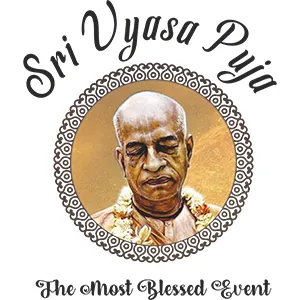
Śrīla A.C. Bhaktivedānta Swami Prabhupāda’s vision for the International Society for Krishna Consciousness was global, revolutionary, and deeply compassionate. He envisioned a society that would awaken human consciousness, establish a spiritual foundation for civilization, and offer people a life centered on devotion, simplicity, and wisdom. More than fifty years later, ISKCON has spread to over 100 countries, with thousands of devotees committed to preserving and expanding the movement. Yet among these, some regions stand out for how strongly they reflect Prabhupāda’s original ideals in both spirit and structure.
India remains a central pillar in ISKCON’s growth and depth, but not just because it’s the birthplace of Vedic tradition. In particular, the western and southern zones — including Maharashtra, Karnataka, Andhra Pradesh, and Tamil Nadu — have developed into vibrant communities that balance scriptural integrity, powerful outreach, and daily spiritual discipline. Temples like ISKCON Chowpatty in Mumbai are known not just for their kīrtans or deities, but for their dedication to personal transformation, youth education, and holistic development. Here, monks and professionals serve side by side, blending tradition with dynamic modern approaches. These zones have also seen an explosion of youth engagement through campus preaching and educational programs that shape students into thoughtful devotees and responsible citizens. Śrīla Prabhupāda always stressed that knowledge should not remain locked in books, and these communities exemplify that principle by making spiritual knowledge active, engaging, and accessible.
The United States and Canada, where Śrīla Prabhupāda first began ISKCON’s journey, continue to hold a special place in the global movement. ISKCON Alachua in Florida, for instance, is home to one of the largest devotee communities in North America. It has become a place where Prabhupāda’s early disciples, their children, and now grandchildren coexist and serve harmoniously. With consistent morning programs, family-based communities, devotee-run schools, and intergenerational mentorship, Alachua represents the strength of a maturing spiritual society. Similarly, temples in Los Angeles, New York, and Toronto are maintaining daily worship, scriptural classes, and prasādam distribution with sincerity and clarity. These communities embody Prabhupāda’s vision of spiritual family life, organized devotional service, and cultural presentation rooted in integrity.
Eastern Europe, particularly Russia and Ukraine, reflects another powerful dimension of Prabhupāda’s legacy — devotion that thrives despite adversity. Despite restrictions and opposition from governments and social structures, devotees in these regions have displayed remarkable dedication. With regular participation in scriptural study, consistent japa and deity worship, and massive book distribution efforts, these communities have demonstrated a commitment to Prabhupāda’s standards that is both inspiring and humbling. Their outreach is not limited to large festivals but includes deep, one-on-one connections, personal guidance, and the cultivation of serious spiritual habits. The austerity and faith of these communities remind us of how Prabhupāda himself lived — depending fully on Kṛṣṇa, without compromise.
In Western Europe, ISKCON continues to grow in sophistication and substance. Places like Bhaktivedanta Manor in the UK, Radhadesh in Belgium, and New Vraja Dhāma in Hungary are not only spiritual centers but educational and cultural hubs. Bhaktivedanta Manor, donated by George Harrison, has become a model for blending cultural heritage with modern outreach, including school visits, interfaith work, and community engagement. Radhadesh stands out as a center for higher education, offering courses and degrees in theology, Vaishnavism, and spiritual leadership. It has become a sanctuary for people from dozens of countries, reflecting ISKCON’s universal appeal. New Vraja Dhāma, meanwhile, brings Prabhupāda’s desire for Varnāśrama living into practice, with a functioning farm, cow protection, and a simple, spiritually centered life. These European communities are marked by harmony between philosophy and practice, between lifestyle and learning — exactly the synthesis Prabhupāda envisioned for the future of the world.
Africa has become one of ISKCON’s most remarkable success stories in recent decades. In countries like South Africa, Kenya, Nigeria, and Ghana, the movement has expanded not only in numbers but in depth. The Durban temple in South Africa, one of the largest ISKCON centers on the continent, has become a symbol of unity beyond race, culture, and class. Black, Indian, and White devotees serve together in mutual respect, erasing decades of social division through shared spiritual identity. Prabhupāda’s message was never for a particular group — it was meant for the soul, and Africa’s ISKCON communities understand that well. Many African devotees are now leading kīrtan, managing temples, distributing books, and even taking sannyāsa. Outreach in native languages, localized festivals, and educational efforts have made ISKCON not just a foreign import but a homegrown spiritual tradition that is transforming lives.
Then there is Mayapur — the crown jewel of Śrīla Prabhupāda’s dream. Located in West Bengal, Mayapur is being developed as the spiritual capital of the world through the Temple of the Vedic Planetarium (TOVP), an architectural and philosophical marvel. But Mayapur is more than a construction project. It is already a thriving, multicultural community with residents from over 70 countries. Devotees live, study, and serve together, maintaining rigorous deity worship, regular classes, and training programs in spiritual arts. The Mayapur Academy is training pujaris from around the world, and the gurukulas and schools serve children from dozens of cultures. When Śrīla Prabhupāda said that people from all over the world would come together to chant and glorify Lord Caitanya in Mayapur, this is the exact vision unfolding today. It is a powerful symbol that unity in diversity is not a future goal — it is a present reality.
All of these regions, in their unique ways, carry the flame of Śrīla Prabhupāda’s mission forward. Whether through the disciplined devotional culture of Russia, the multigenerational community life in Alachua, the culturally rooted programs of India, or the educational centers of Europe, Prabhupāda’s movement continues to thrive. These aren’t isolated examples; they are glimpses into a living legacy. They teach us that when we follow Prabhupāda’s teachings not selectively, but holistically — when we honor purity, discipline, community, compassion, and philosophical depth — ISKCON doesn’t just grow. It flourishes.
If we wish to honor Śrīla Prabhupāda today, the question is not only where his vision is upheld — but how we can each take part in upholding it. Every temple, every home, and every devotee has a role in making that vision real, here and now.