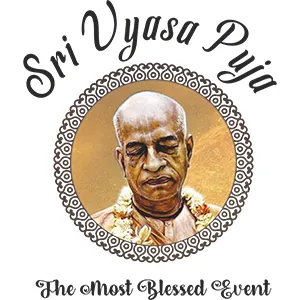
Śrīla Prabhupāda was not just a revolutionary preacher—he was a deeply refined spiritual artist who understood that beauty, when directed toward Kṛṣṇa, becomes a powerful means of transformation. In his mission to awaken the world to bhakti, he didn’t rely on abstract philosophy alone. He encouraged art, music, drama, and culture as integral expressions of devotional life—tools to soften hearts, convey philosophy, and attract people to Kṛṣṇa consciousness.
Among the many cultural expressions inspired by him, there are certain projects that capture his mood more deeply than others—not just in form, but in purpose, humility, and spiritual conviction. Below are three standout examples, ranked for how purely and powerfully they carry Śrīla Prabhupāda’s heart into the world.
1. “The Radha-Damodara Traveling Sankirtan Party” – A Living Musical Mission
More than a formal music album or concert, the Radha-Damodara Traveling Sankirtan Party (mid-1970s) was a living, rolling symphony of Śrīla Prabhupāda’s mood. Equipped with a bus, mṛdaṅgas, harmoniums, books, and the holy name, these youth-filled teams stormed across North America—holding harināma in streets, performing skits at colleges, and distributing Śrīla Prabhupāda’s books by the thousands.
What made this initiative so representative of his mood?
-
Centered on preaching: Prabhupāda said, “Print and distribute books. That is real preaching.” The Radha-Damodara buses made that their life.
-
Music with mission: Their kīrtans were not performances. They were prayers. They were bold, ecstatic, raw, and public.
-
Sacrifice and renunciation: The devotees lived minimally, slept in vans, and worked tirelessly—driven not by applause but by love for guru and Kṛṣṇa.
This wasn’t a staged theatre piece, but a real-life drama where the actors were surrendered souls, the script was the Bhagavad-gītā, and the audience was the entire world. Śrīla Prabhupāda personally praised them, saying, “This is the spirit I want to see in all my disciples.”
Their music, movement, and sincerity remain the gold standard of spiritual artistry in action.
2. “Abhay Charan” (TV Serial, 1996) – A Dramatic Offering with Devotional Integrity
Few media efforts have captured the life and mood of Śrīla Prabhupāda with as much depth and devotion as the television series “Abhay Charan”, created by Gaurāṅga Darśana dāsa in the 1990s.
This dramatized biography is not just a reenactment of historical events. It is a devotional meditation, designed to help viewers feel Śrīla Prabhupāda’s sacrifice, his pain, his mission, and most of all—his dependence on Kṛṣṇa.
What makes this series exceptional?
-
Authenticity over embellishment: Every scene is rooted in documented fact. Dialogues often use real letters, diary entries, and books.
-
Tone and atmosphere: It doesn’t over-dramatize. It respects the gravity of Śrīla Prabhupāda’s mission and preserves the spiritual dignity of his life.
-
Accessibility: Aired on national television in India, it brought Śrīla Prabhupāda’s legacy to homes that may never have visited a temple.
For many, especially devotees growing up in India, “Abhay Charan” became their first and most lasting impression of Śrīla Prabhupāda’s life. It made him relatable, understandable, and deeply lovable.
The series doesn’t just tell a story—it invites the viewer to follow in his footsteps.
3. “Krishna Art” by ISKCON Artists – Visual Bhakti at Its Best
The third gem in this cultural offering is Krishna Art—the paintings that filled the pages of Śrīla Prabhupāda’s books. Spearheaded by artists like Jadurani Devī Dāsī (later Syāmarānī), Muralīdhara dāsa, Baradrāja dāsa, and others under Śrīla Prabhupāda’s direct guidance, these works shaped the way the world envisions Kṛṣṇa, His pastimes, and His devotees.
But these weren’t just paintings. They were windows into the spiritual world. Śrīla Prabhupāda didn’t see art as “decoration.” He saw it as śāstra with form—a visual representation of eternal truths.
Why is Krishna Art so central to Prabhupāda’s mood?
-
Rigorous fidelity to scripture: Prabhupāda would instruct: “The peacock must be here. The lotus should look like this. The flute should be on the right hand.” He wanted accuracy, not imagination.
-
Didactic and devotional: These paintings are designed to teach and to melt the heart—simultaneously.
-
Training in humility: The artists didn’t sign their names. Their identity was “servant of Śrīla Prabhupāda.” Their pride was invisible.
Today, even non-devotees recognize these artworks. From the cover of the Bhagavad-gītā As It Is to the illustrations of Kṛṣṇa’s pastimes, these images have quietly entered millions of lives—preaching without words, just as Śrīla Prabhupāda envisioned.