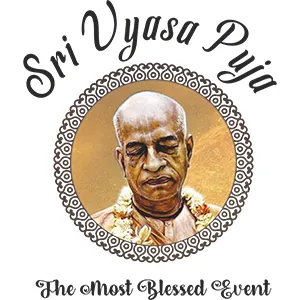
Srila A.C. Bhaktivedanta Swami Prabhupada, the founder-acharya of the International Society for Krishna Consciousness (ISKCON), was not only a deeply realized spiritual leader but also a revolutionary strategist. His decisions laid the foundation for a global spiritual movement that continues to transform millions of lives. Many of his choices defied convention, tradition, and even practicality — yet they bore astonishing spiritual results. Below is a ranking of the most revolutionary decisions Srila Prabhupada made, based on their long-term global impact, boldness, and alignment with Lord Caitanya’s mission.
1. Boarding the Jaladuta at Age 69: Risking Everything for the West
Perhaps the single most courageous and revolutionary act in modern spiritual history was Srila Prabhupada’s decision to leave India in 1965 aboard a cargo ship to America — with no money, no support, and only a crate of his books. At an age when most retire, he embarked alone on a mission no one in the Gaudiya Vaishnava lineage had dared: to bring Krishna consciousness to the Western world.
Two heart attacks at sea did not deter him. He arrived in New York City with just $7, and from that seemingly impossible beginning, a worldwide spiritual renaissance was born. This decision ranks first because it created the very opportunity for everything else to follow.
2. Giving Brahmana Initiation to Westerners
In Vedic tradition, brahmanas — teachers and priests — came from specific lineages and followed strict samskaras. Srila Prabhupada, however, saw beyond birth. He boldly initiated Western disciples as brahmanas, empowered them to perform Deity worship, teach scriptures, and even lead temples.
This shocked conservative Indian society but aligned deeply with the teachings of Bhagavad-gītā, where Krishna declares that spiritual qualification is based on qualities and actions, not birth. By doing this, Prabhupada broke centuries of caste-based prejudice and fulfilled Lord Caitanya’s prophecy of a spiritual revolution.
3. Establishing Ratha-Yatra in Western Cities
To bring the Lord’s mercy to the masses, Prabhupada initiated the public celebration of Ratha-Yatra — the grand chariot festival of Lord Jagannatha — not just in India but in major Western cities like San Francisco, London, and New York.
This was revolutionary in both scale and setting. Deities being pulled on massive chariots through downtown streets, with chanting, dancing, and feasting, not only brought Krishna into public view but also proved that Vedic culture could thrive outside India. It showed that devotional life need not be confined to temples but can flood entire cities.
4. Authorizing Women as Preachers and Leaders
At a time when even in India spiritual leadership was often a male-dominated realm, Srila Prabhupada allowed women to take the role of temple presidents, give lectures, distribute books, and perform Deity worship. He insisted that spiritual opportunity should be based on sincerity, not gender.
This decision opened the doors for hundreds of women to take to spiritual life seriously and to serve in empowered ways. It also made Krishna consciousness accessible to the broader public in the West, where gender equality is foundational. It was not a compromise, but a courageous alignment with real devotional values.
5. Translating and Printing the Bhagavatam in English
Srila Prabhupada once said, “Books are the basis.” Before even reaching America, he focused on translating and publishing the first three volumes of the Śrīmad-Bhāgavatam in English. Once in the West, he never stopped writing — completing over 70 books, including translations and purports to the Bhagavad-gītā, Bhāgavatam, and Caitanya-caritāmṛta.
This was revolutionary because he realized that books would be the long-term carriers of Krishna consciousness, accessible to future generations. His translations weren’t academic but devotional — lucid, clear, and transformational. These books remain the heart of ISKCON.
6. Creating Farm Communities to Demonstrate “Simple Living, High Thinking”
In the 1970s, Prabhupada strongly emphasized the importance of self-sustaining farm communities — a vision that was decades ahead of modern ecological movements. He encouraged devotees to grow their own food, keep cows, and center village life around the temple and Deity worship.
This was not merely a lifestyle alternative — it was a revolutionary counter to materialism and urban dependency. Today, these communities stand as models of spiritual ecology, preserving both Vedic traditions and environmental values.
7. Starting the Gurukula System for Spiritual Education
Rather than relying solely on secular schools, Prabhupada introduced the gurukula model — training children in spiritual values from an early age. He established the first ISKCON gurukula in Vrindavan in the mid-1970s, envisioning a system where academic and devotional education would go hand-in-hand.
Though faced with challenges, the vision itself was radical: to produce a generation of spiritually grounded youth who would lead the future with integrity and wisdom.
8. Empowering Congregational and Global Preaching
Srila Prabhupada didn’t want his movement to remain temple-centric or limited to a few elite followers. He introduced large-scale sankirtana, book distribution, and public preaching as the pillars of ISKCON life. He empowered ordinary people — householders, students, professionals — to become full-time or part-time ambassadors of Krishna consciousness.
The result? ISKCON became a dynamic, inclusive, and global movement with presence in over 100 countries, reaching millions with books, food, festivals, and spiritual care.