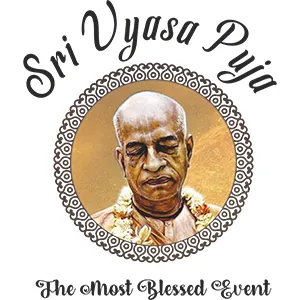
When Śrīla A.C. Bhaktivedanta Swami Prabhupāda spoke, the world listened—not because of dramatic presentation or intellectual gimmicks, but because truth stood behind his words. His arguments were never for fame or personal pride. He debated not to defeat people but to defeat illusion. His was not a voice of confrontation, but of clarity.
Whether seated on a temple vyāsāsana or pacing on a morning walk, Śrīla Prabhupāda carried the weight of thousands of years of Vedic knowledge—distilled into bold, often breathtaking, declarations. His logic came from śāstra, and his heart was full of compassion. What makes his debates unforgettable is the simplicity with which he untangled complex philosophical confusions.
Let us explore some of his most powerful debates—not just to admire them, but to understand how they still challenge us to live more truthfully today.
“You Are Not This Body” — The Spiritual Wake-Up Call
This was not merely a philosophical statement for Śrīla Prabhupāda—it was the foundation of his entire preaching movement. Almost every lecture, conversation, or debate circled back to this essential point: we are not the body, but the eternal soul (ātmā), temporarily housed in a physical shell.
What made this message revolutionary was not its novelty, but its timelessness and urgency. In universities and temples alike, he asked the same question: “If you are the body, why does the body become useless after death? Who has left?” This line of reasoning unsettled even the proudest intellectuals.
He would urge, “Try to understand this—unless you realize that you are not the body, your whole civilization is based on illusion.” With this one argument, Śrīla Prabhupāda shifted the entire conversation from temporary concerns to eternal truths.
“Life Comes from Life” — The Unanswered Challenge to Science
During his morning walks and in many interviews, Śrīla Prabhupāda often challenged scientists, asking them a question they could never answer: “If life comes from matter, why can’t you create it in a laboratory?”
He never dismissed science, but he dismantled blind faith in materialism. With disarming simplicity, he would say: “A hen lays an egg and produces life. You try to make one egg with your chemicals and produce a chicken. Then we’ll talk.”
This wasn’t just clever talk—it was a profound philosophical confrontation. He exposed the deepest mystery modern science cannot explain: consciousness. The presence of life, he emphasized, points to a spiritual source. By repeating, “Life comes from life,” Śrīla Prabhupāda offered an elegant Vedic solution to a riddle that scientists still cannot solve.
“God Is Not Your Servant” — The Purification of Devotion
Śrīla Prabhupāda did not hesitate to confront the widespread misunderstanding of religion as a transactional system. He saw how many people treated God as a divine order-supplier—approached only when desires needed to be fulfilled.
He often said, “You don’t want God; you want things from God. You love your dog, not your Lord.” This harsh-sounding statement wasn’t meant to hurt—it was a mirror held up to show the hollowness of such devotion.
True bhakti, Śrīla Prabhupāda explained, meant serving the Lord unconditionally, with love, not deals. He pointed out that even demons pray—but only when in trouble. His call was to rise above fear and greed and enter the pure space of loving devotion.
“Can You Stop Death?” — The End of All Arguments
Perhaps one of his most spiritually penetrating questions was one that could stop all other debates in their tracks: “You may say there is no God. But can you stop death?”
Śrīla Prabhupāda’s genius lay in exposing the real problem of life—birth, death, disease, and old age—and how all philosophies, material or religious, must face these truths. With this one question, he often brought even the most determined atheists to silence.
He reminded everyone that death is the final exam, and any worldview that doesn’t prepare you for that is incomplete. This wasn’t fear-mongering—it was a wake-up call to spiritual urgency. He didn’t want followers. He wanted people to wake up and seek the eternal.
“Do You Want to Become a Dog Again?” — The Illusion of Freedom
In one particularly sharp debate, a student claimed that human beings should be free to enjoy sense pleasures without guilt. Śrīla Prabhupāda calmly responded: “Fine. Enjoy. But what is the use if your next life is as a dog?”
This wasn’t a moralistic warning—it was a metaphysical truth. Karma is not sentimental, he would explain. Actions have reactions. If we degrade ourselves through uncontrolled sense indulgence, we return in lower forms of life.
He offered a higher alternative—not repression, but real pleasure through spiritual connection. He didn’t say don’t enjoy. He said enjoy with consciousness, with devotion, with responsibility for your soul’s journey.