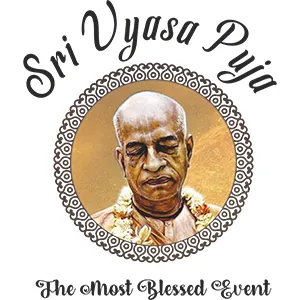
Śrīla A.C. Bhaktivedanta Swami Prabhupāda, the founder-ācārya of ISKCON (International Society for Krishna Consciousness), is widely revered for his extraordinary spiritual achievements: he translated and commented on over 80 volumes of Vedic texts, established more than 100 temples worldwide, and inspired a global cultural and spiritual renaissance. But apart from his prolific scholarly work, there is another dimension to his legacy — one far more intimate, emotional, and poetic.
This is the world of poems and devotional writings — both by Śrīla Prabhupāda and about him — that unveil the heart of a pure devotee, surrendering himself entirely to Krishna and inspiring others to follow the same path. These writings aren’t mere literary works; they are acts of devotion, often composed in moments of vulnerability, gratitude, and divine connection.
In this blog, we explore some of the most powerful and poetic expressions that capture Śrīla Prabhupāda’s glory, ranked not by popularity, but by depth of sentiment and spiritual impact.
🥇 1. Jaladuta Poem: “Prayer to the Lotus Feet of Krishna” (1965)
Perhaps the most soul-revealing writing Śrīla Prabhupāda ever penned, this poem was written aboard the Jaladuta, a cargo ship ferrying him from Calcutta to New York in 1965. At the age of 69, with two heart attacks behind him and an unknown world ahead, he poured his soul into Bengali verses, praying to Lord Krishna for strength and success in his mission.
The poem expresses both humility and complete surrender:
This poem is more than personal reflection; it’s a historical declaration of surrender, a dialogue between the servant and the Supreme, filled with devotion, uncertainty, and unwavering trust.
🥈 2. “He Lives Forever” – Vyāsa Pūjā Tribute by Disciples (1978)
After Śrīla Prabhupāda departed this world in November 1977, the following year’s Vyāsa Pūjā book featured one of the most quoted lines in ISKCON history:
This single sentence, written by one of his loving disciples, sums up the essence of guru-tattva in the Gaudiya Vaishnava tradition — that the spiritual master never dies, for he lives in his teachings and the hearts of his followers.
This line has since become a spiritual maxim repeated in temples, lectures, and books. It captures Prabhupāda’s immortality, not in body, but in mission and message.
🥉 3. Annual Vyāsa Pūjā Offerings by Devotees
Every year, disciples and followers from around the world contribute personal homages to the Vyāsa Pūjā book — a yearly offering on Śrīla Prabhupāda’s appearance day. These poems, essays, and letters form a mosaic of global devotion, showing how one soul touched countless hearts.
Titles like:
-
“Through You I Met Krishna”
-
“You Were Waiting in My Darkest Hour”
-
“The Fire You Lit Burns Still”
— reveal how Śrīla Prabhupāda became the guiding light in people’s lives. These aren’t lofty philosophical texts but emotive and often poetic expressions of gratitude, showcasing how the guru’s grace transforms lives.
4. Satsvarūpa Dāsa Goswami’s “Prabhupāda Meditations” Series
One of Śrīla Prabhupāda’s earliest disciples, Satsvarūpa Dāsa Goswami, captured the intimate, day-to-day experience of serving and observing his spiritual master through his Prabhupāda Meditations series. These writings are a blend of journal entries, poetic reflections, and spontaneous realizations.
Rather than glorifying Prabhupāda from a distance, these meditations present him as he was — simultaneously majestic and approachable, firm yet compassionate. Through his writing, readers come to see the guru not as a distant saint, but as a living, breathing servant of Krishna who cried, laughed, instructed, and prayed.
5. “O Śrīla Prabhupāda” – Bhakti Charu Swami’s Poetic Offering
Written by one of his most beloved disciples, this poem beautifully expresses the mood of surrender and reverence. Originally composed in Bengali, and later set to music, the poem includes heartfelt lines like:
This offering has been sung and quoted at many ISKCON gatherings. It is often accompanied by moving visuals and music that deepen its emotional impact, and it stands as one of the most artistically devotional tributes to Śrīla Prabhupāda to date.
6. Guru Praṇāma Mantras Recited Daily
While these Sanskrit verses are not often thought of as poems in the traditional sense, they are devotional compositions written by Śrīla Prabhupāda’s disciples, glorifying him as the representative of Krishna.
Recited before class, kīrtan, or offerings, these mantras acknowledge his authority, his purity, and his divine empowerment to spread bhakti around the globe. The repetition of these mantras every day by thousands of devotees is a collective poetic act, tying the worldwide community to their eternal guide.
7. Poetic Language in Prabhupāda’s Letters and Conversations
Even in informal communication, Śrīla Prabhupāda’s language often had a natural rhythm, balance, and beauty. Many of his phrases, uttered spontaneously, now read like poetry:
These maxims are profound yet simple. They have become guiding mottos for ISKCON as an institution and are quoted by senior devotees in speeches and workshops.
This poetic instinct was not art for art’s sake — it was the natural language of someone whose mind was fully immersed in Krishna consciousness.
8. Traditional Bhajans and Their Connection with His Legacy
Although not written about him specifically, many classical Gaudiya bhajans composed by saints like Narottama Dāsa Ṭhākura and Bhaktivinoda Ṭhākura took on new meaning in the life and mission of Śrīla Prabhupāda.
He regularly translated and taught these bhajans, and when sung in ISKCON temples, devotees often feel they express exactly what Prabhupāda embodied — selfless devotion, humility, and divine longing.
One such example is “Hari Hari Biphale Janama Goinu”, which laments wasting human life without devotional service. Prabhupāda made it central to ISKCON kīrtan, making its message timeless and personal.